Laura's Selection
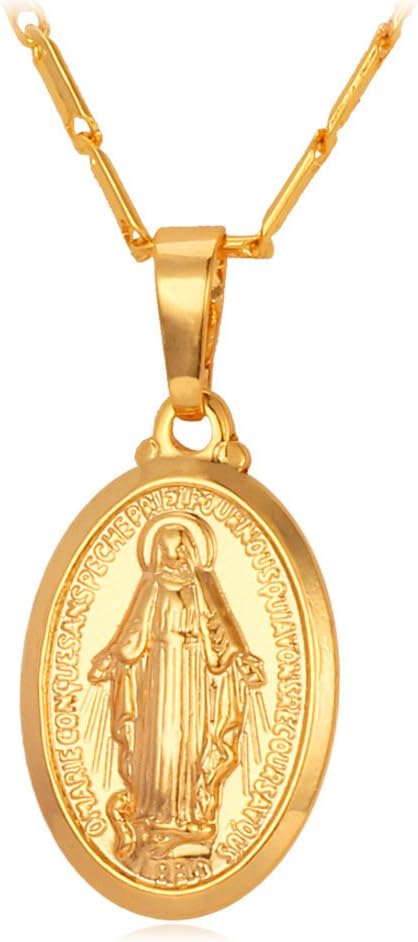
U7 Virgin Mary Necklace for Women,18K Gold Plated/Sterling Silver
18K Gold Plated / Baño de Oro 18K con acabado de orfebrería fina.
Prime Delivery Guaranteed
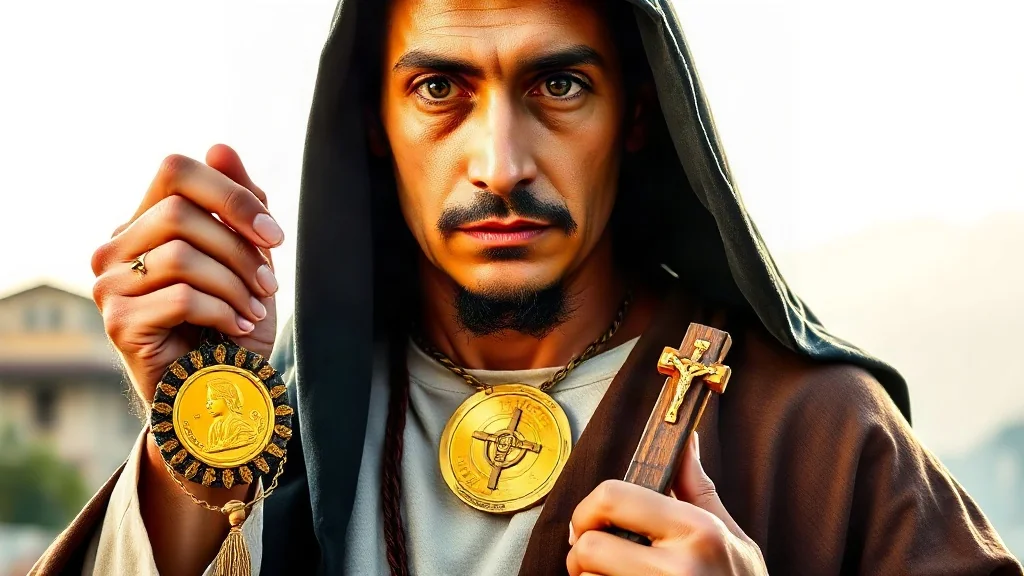
The figure of Saint Juan Diego Cuauhtlatoatzin transcends the mere boundaries of hagiography to become a cornerstone of Latin American identity and a profound testament to the divine preference for the humble. As a researcher of sacred arts and a historian of the Catholic faith, I perceive in Juan Diego not only a messenger of a miraculous apparition but a bridge between two colliding worlds: the ancestral wisdom of the Nahua people and the burgeoning evangelization of the New Spain. His life, marked by a silence that speaks volumes of interiority and a humility that mirrored the very essence of the Gospel, serves as a spiritual catalyst. To understand Saint Juan Diego is to understand the theology of the "small"—the conviction that God chooses the weak and the marginalized of the world to confound the proud and to deliver a message of universal hope and maternal protection. From a devotional and curatorial perspective, the spiritual significance of Saint Juan Diego is inextricably linked to the concept of inculturation. The apparitions of Our Lady of Guadalupe in 1531 were not merely supernatural events; they were a sophisticated theological dialogue expressed through symbols, language, and gestures that the indigenous population could comprehend. Juan Diego, as the chosen intermediary, embodies the dignity of the indigenous soul, elevated by grace to be the custodian of a celestial mandate. His canonization by Saint John Paul II in 2002 was not merely a formal ecclesiastical recognition, but a definitive affirmation of the spiritual validity of the native peoples of the Americas, positioning the "Eagle that Speaks" as a timeless intercessor for all who seek refuge under the mantle of the Virgin.
The historical trajectory of Saint Juan Diego begins in the year 1474 in Cuauhtitlán, located within the strategic and cultural sphere of the kingdom of Texcoco. Born into the Nahua ethnicity, he was known by his indigenous name, Cuauhtlatoatzin, which translates elegantly as "The Eagle that Speaks" or "He who speaks like an eagle." This name is deeply symbolic, as the eagle held a position of supreme prestige in Mesoamerican cosmology, representing strength, vision, and a connection to the divine. Around 1524, during the early waves of Franciscan missionary activity following the fall of Tenochtitlan, Cuauhtlatoatzin embraced the Christian faith and received the baptismal name of Juan Diego, marking the beginning of a life characterized by a synthesis of his ancestral roots and his newfound devotion to the Triune God.
The pivotal events of his life unfolded between December 9 and 12, 1531, upon the hill of Tepeyac. According to the sacred tradition, the Virgin Mary appeared to Juan Diego, requesting that he petition the Bishop of Mexico, Fray Juan de Zumárraga, to construct a temple in her honor. This period was one of immense social upheaval and spiritual longing; the indigenous population was reeling from conquest and disease. Juan Diego’s role as the messenger was fraught with difficulty, as he was a man of low social standing facing the skepticism of the ecclesiastical hierarchy. Yet, his perseverance and unwavering faith led to the miraculous sign of the Castilian roses blooming in winter and, ultimately, the miraculous imprint of the Virgin's image upon his *tilma*, a cloak made of coarse ayate fiber.
Following the miraculous manifestation of the image, Juan Diego did not seek fame or earthly power. Historical and devotional sources describe his subsequent years as a period of profound austerity, prayer, and penitence. He remained a humble servant of the Church, often attending to pilgrims and maintaining a life of contemplative silence near the sanctuary of Tepeyac. He became a living witness to the transformation that grace operates in the human heart, transitioning from a simple laborer to a pillar of faith for the nascent Mexican Church. His earthly journey concluded in 1548, leaving behind a legacy of holiness that would remain a quiet but powerful current in the devotion of the faithful for centuries.
The path to formal recognition in the liturgical calendar was a long and meticulous process, reflecting the Church's rigor in verifying the virtues of its saints. It was not until the late 20th century that the process reached its zenith under the pontificate of Saint John Paul II. On May 6, 1990, Juan Diego was beatified in the Basilica of Guadalupe, an event that drew millions of pilgrims. Finally, on July 31, 2002, he was canonized, becoming the first indigenous saint of the Americas. This act of the Holy See solidified his status not only as a historical figure of the 16th century but as a perennial model of obedience and faith for the global Catholic community.
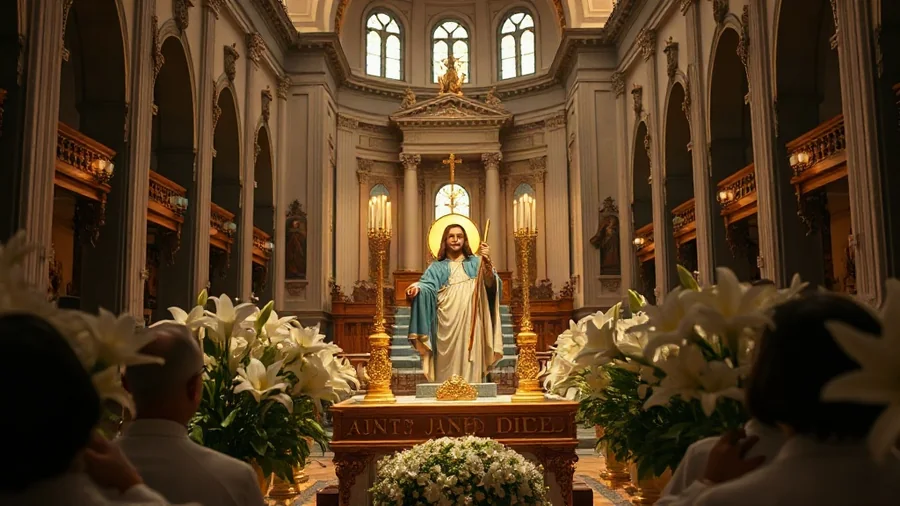
Theologically, the life of Saint Juan Diego is a masterclass in the doctrine of Divine Providence. The selection of an indigenous man, rather than a Spanish prelate or a learned scholar, to receive the message of the Guadalupe apparitions is a deliberate theological statement. It underscores the belief that God reveals His mysteries to the "pure in heart" (*anawim*), echoing the Magnificat's proclamation that God "lifts up the lowly." Juan Diego’s obedience—his willingness to return to the Virgin and to the Bishop despite his own feelings of inadequacy—mirrors the *Fiat* of Mary herself. In this sense, Juan Diego is not merely a witness to a miracle, but a participant in a salvific plan that sought to heal the rift between the conqueror and the conquered through the medium of maternal love.
The symbolism inherent in the encounter at Tepeyac is profoundly rich. The *tilma*, a garment of the poorest quality, became the canvas for the most revered image in the Americas. This juxtaposition of the coarse fiber and the celestial image symbolizes the intersection of the human and the divine, the earthly and the eternal. For the Nahua people, the imagery of the Virgin—her starry mantle, her crescent moon, and her position before the sun—was not alien but was interpreted through their own cultural lens as a sign of a new, supreme deity who came not to destroy, but to protect. Juan Diego acted as the cultural translator of this message, ensuring that the faith was not imposed as a foreign entity but received as a homecoming.
Furthermore, the spiritual meaning of Juan Diego's life resides in his capacity for "holy indifference." He sought no credit for the miracle; his only desire was the fulfillment of the Virgin's request. This detachment from ego is the hallmark of true sanctity. In the Catholic tradition, Juan Diego represents the "hidden life" of the believer—the quiet, daily sacrifice and the steadfast trust in God's timing. His life teaches us that the most significant contributions to the Kingdom of God often occur in the shadows, away from the gaze of the world, fueled by a secret intimacy with the Creator.
Finally, the legacy of Saint Juan Diego informs the modern understanding of Mariology as a tool for evangelization. The "Guadalupan message" is one of accompaniment. By appearing to Juan Diego, Mary signaled that she was present in the suffering and the hope of the indigenous peoples. This theological framework transforms the image of the Virgin from a static icon into a living presence. Juan Diego, therefore, remains the eternal prototype of the missionary: one who carries a message of love, endures the skepticism of the world, and relies entirely on the grace of God to achieve the impossible.
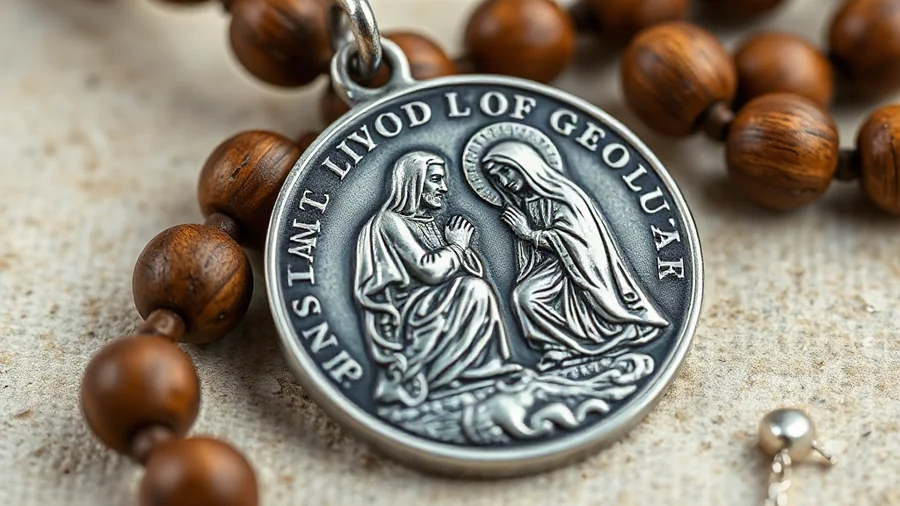
As a curator of sacred jewelry, I find that the devotion to Saint Juan Diego and Our Lady of Guadalupe has inspired some of the most exquisite examples of liturgical and devotional goldsmithing in history. While the original *tilma* is a textile, the desire to honor this miracle has led to the creation of countless medals, reliquaries, and ornaments crafted from the most noble of metals. In the realm of high-end devotional jewelry, the selection of materials is never arbitrary; it is a theological choice. 14K gold is frequently employed for its enduring brilliance and purity, symbolizing the incorruptibility of the divine message and the eternal nature of the soul. The warmth of gold reflects the "Sun of Justice," echoing the rays that surround the Virgin in the image carried by Juan Diego.
Conversely, 925 Sterling Silver is the metal of choice for those seeking to represent the purity and humility of Saint Juan Diego himself. Silver, with its lunar radiance, corresponds to the crescent moon beneath the feet of the Virgin, symbolizing the reflection of divine light. In the creation of professional-grade devotional medals, the use of 925 silver ensures a balance between durability and luminosity. When crafting a piece intended to be an heirloom, the hallmark—the official stamp of purity—is essential. A true piece of sacred jewelry must bear the mark of its authenticity, just as Juan Diego's life bore the mark of authenticity through his virtues.
The craftsmanship of these pieces often involves intricate techniques such as *repoussé* and chasing, where the metal is worked from the reverse side to create a three-dimensional relief of the Saint or the Virgin. For a piece to be considered a work of art and a tool of devotion, the finish must be impeccable. High-polish finishes are used to evoke the glory of heaven, while brushed or satin finishes are often applied to pieces depicting Saint Juan Diego to reflect his humility. The integration of precious stones, such as small diamonds or sapphires, can further elevate the piece, representing the "stars" of the Virgin's mantle, turning a simple necklace into a portable sanctuary.
Maintaining these sacred objects requires a rigorous approach to care to ensure they pass through generations. Gold and silver, while noble, are subject to the elements. I always recommend the use of a soft, lint-free cloth and the avoidance of harsh chemicals that can erode the fine details of the engraving. For pieces that have been blessed by a priest, the care extends beyond the physical; the object is treated with a reverence that acknowledges its role as a *sacramental*. By preserving the physical integrity of a 14K gold or 925 silver medal, the believer preserves a tangible link to the intercession of Saint Juan Diego, ensuring that the "Eagle that Speaks" continues to inspire faith in future generations.
18K Gold Plated / Baño de Oro 18K con acabado de orfebrería fina.
Prime Delivery Guaranteed
Stainless Steel / Acero Inoxidable con acabado de orfebrería fina.
Prime Delivery Guaranteed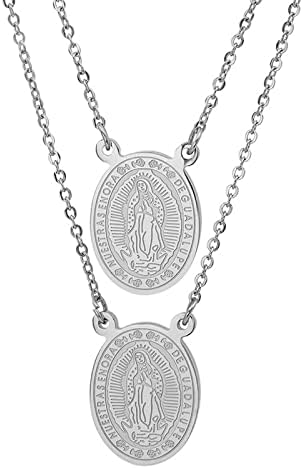
18K Gold Plated / Baño de Oro 18K con acabado de orfebrería fina.
Prime Delivery GuaranteedWhen selecting a Guadalupana piece, always prioritize certified precious metals (solid nickel-free 14K gold or Italian 925 sterling silver). Upon receiving it, take it to your parish priest for a traditional Catholic blessing to consecrate it as an enduring sacramental of protection.

Gold Plated / Chapa de Oro con acabado de orfebrería fina.
Prime Delivery Guaranteed
High-Quality Alloy / Aleación Metálica Duradera con acabado de orfebrería fina.
Prime Delivery Guaranteed
18K Gold Plated / Baño de Oro 18K con acabado de orfebrería fina.
Prime Delivery GuaranteedSaint Juan Diego Cuauhtlatoatzin was an indigenous Nahua man from Cuauhtitlán who served as the chosen messenger for the apparitions of Our Lady of Guadalupe in 1531. His life is characterized by profound humility, an unwavering faith in the face of skepticism, and a total obedience to the divine will. He is best remembered for carrying the miraculous image of the Virgin on his *tilma*, which served as the definitive sign to Bishop Zumárraga to build the sanctuary at Tepeyac. His canonization by Pope John Paul II on July 31, 2002, is of immense historical and spiritual significance because it officially recognized the sanctity of an indigenous person from the Americas. This act validated the spiritual dignity of native peoples and highlighted the role of inculturation in the Catholic Church, proving that the Gospel transcends cultural boundaries and finds a home in the hearts of the humble, regardless of their social or ethnic origin.
To verify the authenticity of a piece of sacred jewelry, one must first look for the hallmark. For silver, the stamp "925" indicates Sterling Silver, meaning the piece is 92.5% pure silver. For gold, the mark "14K" or "585" indicates that the piece is 14 karats, consisting of 58.5% pure gold. These hallmarks are the industry standard and are essential for ensuring that the metal is genuine and not a mere plating over a base metal. Beyond the hallmark, a professional jeweler or curator can perform a density test or use an XRF (X-ray fluorescence) analyzer to determine the exact composition of the metal without damaging the piece. From a devotional standpoint, the authenticity of the metal mirrors the authenticity of the faith; just as we seek purity in the materials we use to honor the saints, we seek purity of heart in our devotion to them.
When selecting devotional jewelry, one should prioritize the intention behind the piece. If the goal is a daily reminder of humility and trust, a discreet 925 silver medal of Saint Juan Diego is ideal. If the piece is intended as a celebratory heirloom or a gift for a significant milestone, 14K gold is the preferred choice due to its longevity and symbolic value. The design should be timeless, avoiding overly trendy elements in favor of classical iconography that respects the tradition of the Tepeyac apparitions. Regarding the wearing of such jewelry, it is recommended to do so with a spirit of prayer. A devotional necklace is not a mere accessory but a "sacramental" if it has been blessed. It should be worn with the awareness that it serves as a catalyst for the intercession of the saint. I suggest wearing these pieces close to the heart, symbolizing the interiority and the secret devotion that Saint Juan Diego practiced throughout his life.
The legacy of Saint Juan Diego can be integrated into family prayer by focusing on the virtues of humility and listening. Families can designate a "corner of prayer" featuring an image of Our Lady of Guadalupe and a representation of Saint Juan Diego, creating a domestic sanctuary. By reading the account of the apparitions together, parents can teach their children that God does not look at outward appearances or social status, but at the disposition of the heart. Furthermore, families can practice "acts of humility" in honor of Saint Juan Diego, such as serving those in need or practicing patience during conflicts. Praying a novena to Saint Juan Diego before the feast of Our Lady of Guadalupe allows the family to reflect on the importance of being "messengers" of peace and love in their own communities, transforming the historical narrative of the 16th century into a living, breathing spiritual practice in the 21st century.
Affiliate Disclosure: As an Amazon Associate, this devotional portal earns from qualifying purchases at zero additional cost to you.
Find the perfect sacred piece in 3 simple steps
Handpicked based on your preferences and occasion