Laura's Selection
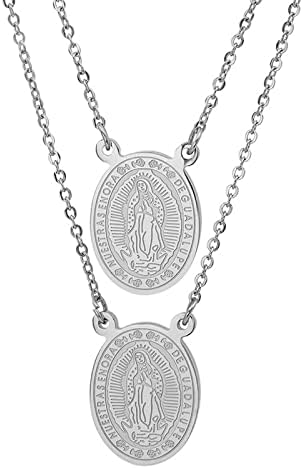
Steeltime Stainless Steel Virgin Mary Guadalupe Scapular
18K Gold Plated / Baño de Oro 18K con acabado de orfebrería fina.
Prime Delivery Guaranteed
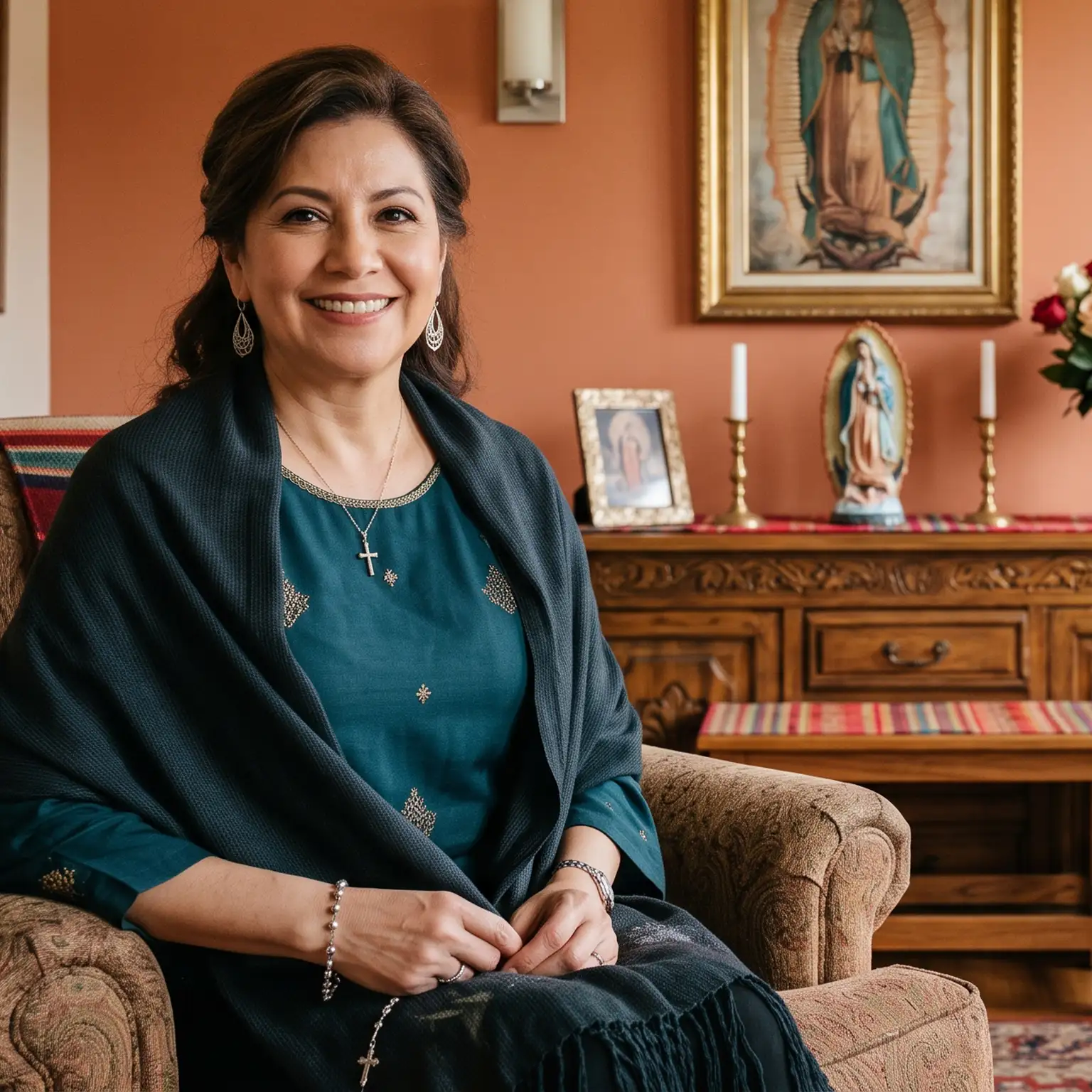
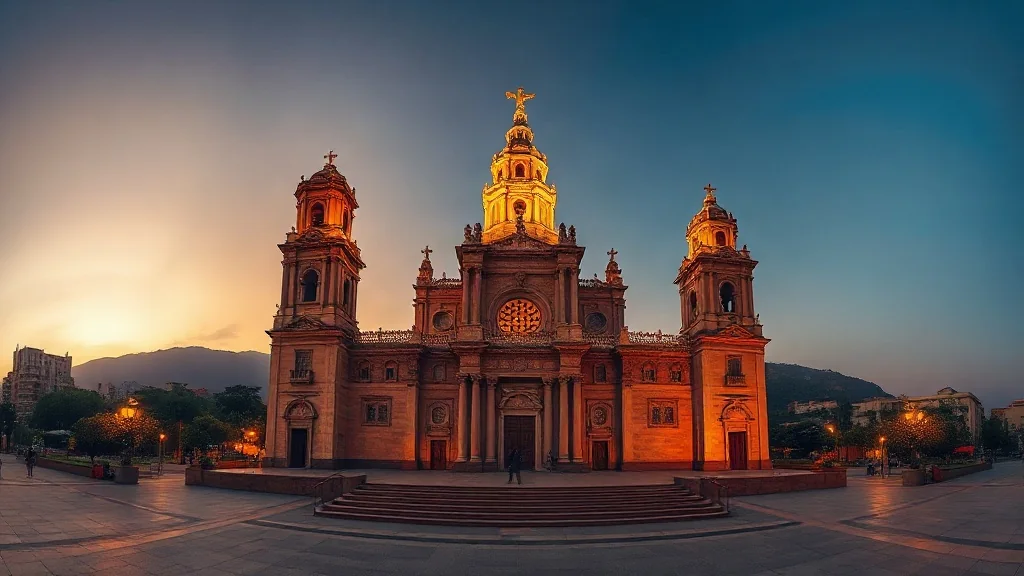
The Hill of Tepeyac represents far more than a geographical elevation in the northern reaches of Mexico City; it is a profound metaphysical axis where the terrestrial and the divine, the indigenous and the European, and the ancient and the eternal converge. From the perspective of a researcher of the sacred, Tepeyac is a palimpsest of faith, a site where layers of devotion have been superimposed over centuries, creating a spiritual resonance that vibrates across the entire American continent. To understand Tepeyac is to understand the very soul of Mexico, for it is here that the narrative of a wounded people found a maternal embrace, transforming a site of ancestral veneration into the epicenter of one of the most powerful Marian devotions in the history of the Catholic Church. The hill stands as a silent witness to the transition from the ritual landscapes of the Mexica to the triumphant Baroque splendor of the New Spain, embodying a synthesis of identity that continues to define the religious psyche of millions. The spiritual significance of the National Shrine of Guadalupe transcends the boundaries of mere pilgrimage; it is a sanctuary of mediation and hope. For the devotee, the ascent to the Tepeyac is a symbolic journey of purification and surrender, culminating in the encounter with the *Morenita*, the Virgin who speaks the language of the humble. The theological weight of this site lies in its capacity to act as a bridge: the Virgin of Guadalupe did not arrive to erase the past, but to fulfill it, offering a new covenant of love and protection. As a curator of sacred art, I perceive the Tepeyac not only through the lens of history but through the tangible manifestations of faith—the countless ex-votos, the shimmering gold of the altars, and the collective prayer that permeates the air. It is a place where the invisible becomes visible, and where the architectural grandeur of the Basilicas serves as a physical vessel for an intangible, infinite grace.
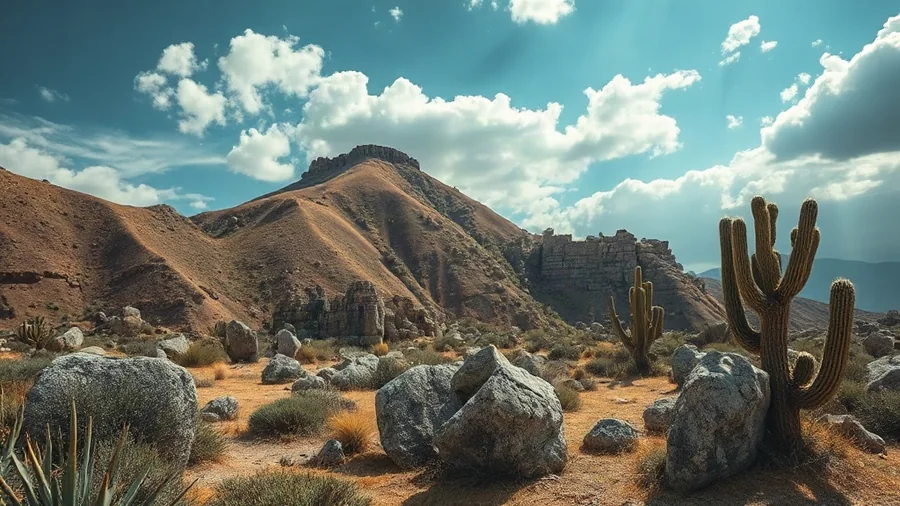
The origins of Tepeyac, derived from the Nahuatl *Tepeyacac*, meaning "at the nose of the hill" or "at the tip of the hill," are deeply rooted in the pre-Hispanic ceremonial landscape. Long before the arrival of the Spanish, the hill was a recognized sacred center for the peoples of the Valley of Mexico. It was primarily dedicated to Tonantzin, a deity associated with motherhood, the earth, and fertility. By the 15th century, it is widely accepted by historians and archaeologists that a *teocalli* (temple) stood upon the summit, integrating the hill into a complex ritual network connected by calzadas to the great metropolis of Tenochtitlan. This pre-existing sanctity is crucial, as it established the site as a locus of feminine divine energy, creating a spiritual predisposition that would later facilitate the reception of the Marian message.
The colonial transition began with a profound spiritual rupture and subsequent synthesis. While the first colonial mentions of Tepeyac appear around 1528, the pivotal moment occurred in December 1531. According to the sacred tradition, on the morning of December 9, 1531, the Virgin Mary appeared to Juan Diego, a humble indigenous convert. Over the course of three subsequent encounters—on the 10th and finally on the 12th of December—the Virgin requested the construction of a "sacred house" (a temple) in her honor. The miracle of the Castilian roses blooming in winter and the subsequent imprint of her image upon the *tilma* (the coarse agave-fiber cloak) provided the empirical and spiritual validation required by Bishop Juan de Zumárraga, thereby cementing the Tepeyac as the official site of the apparition.
The institutionalization of the shrine evolved through the centuries, reflecting the growing importance of the cult. In 1695, the construction of the first great Basilica began, a masterpiece of colonial architecture attributed to Pedro de Arrieta. This structure, which opened its doors in 1709, was not merely a church but a statement of the Virgin's sovereignty over the New World. By 1749, the sanctuary was elevated to the status of a *colegiata*, granting it its own chapter of canons and a level of ecclesiastical autonomy that mirrored its immense popularity. This era saw the integration of opulent Baroque elements, where the architecture itself became a form of prayer, designed to evoke awe and reverence in the hearts of the pilgrims who traveled from the furthest reaches of the viceroyalty.
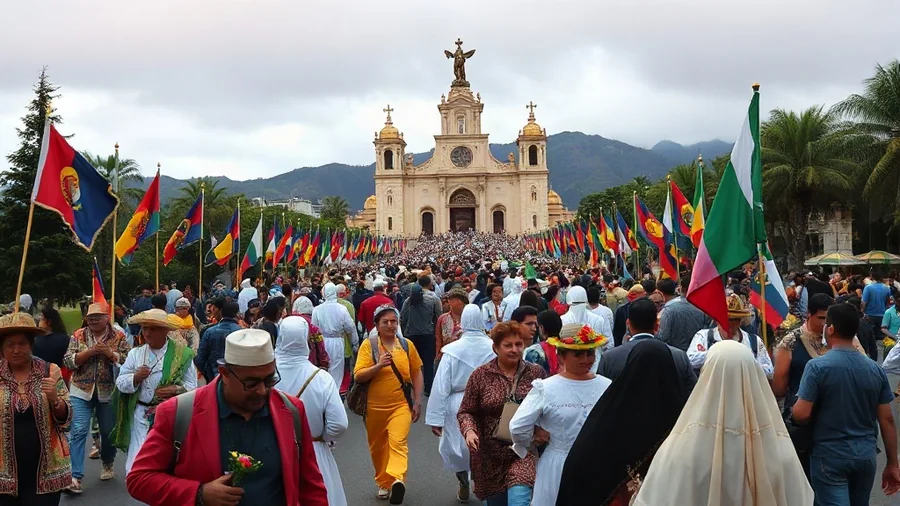
In the modern era, the Tepeyac has undergone significant structural transformations to accommodate the millions of pilgrims who visit every December 12th. The Old Basilica, though damaged by seismic activity, remains a cherished relic of the colonial past, while the New Basilica, designed by architect Pedro Ramírez Vázquez and inaugurated in 1976, represents a daring feat of contemporary engineering. Its circular design allows the image of the Virgin to be visible from any point, symbolizing the universality of her maternal gaze. Today, the complex functions as a global pole of Marian pilgrimage, where the archaeological remnants of the pre-Hispanic past and the monumental scale of the modern shrines coexist, testifying to the enduring nature of the sacred in an ever-changing world.
From a rigorous Catholic theological perspective, the apparitions at Tepeyac are interpreted as a divine intervention aimed at the evangelization of the Americas. The Virgin of Guadalupe is not seen as a separate entity from the Virgin Mary, but as a specific manifestation of her maternal care tailored to a culture in crisis. The choice of Juan Diego—a man of low social standing—is a theological statement on the "preferential option for the poor." By choosing a humble indigenous man as her messenger, the Virgin bypassed the colonial hierarchies, signaling that the Kingdom of God is accessible to all, regardless of caste or origin. This act of divine humility mirrors the *Magnificat*, where Mary proclaims that God lifts up the lowly and casts down the mighty.
The symbolism embedded in the image of the Virgin is a complex theological treatise in visual form. Her attire, the stars on her mantle, and the black sash around her waist are not merely decorative; they are coded messages. In the indigenous worldview, the black sash indicated pregnancy, signaling that Mary was the "Mother of the True God" who was to be born into the New World. Her position in front of the sun and the moon indicates that she is greater than the astral deities of the Mexica, yet she does not crush them; she encompasses them, suggesting that the True Light of Christ fulfills and surpasses previous pagan understandings of the divine. This is the essence of *inculturation*: the Gospel is not imposed as a foreign entity but is woven into the existing cultural fabric to transform it from within.
The request for a "house" at Tepeyac carries profound ecclesiological meaning. In the biblical tradition, the building of a temple is always associated with the presence of God dwelling among His people. By asking for a sanctuary on the hill, the Virgin established a permanent point of mediation between heaven and earth. The Tepeyac thus becomes a "thin place," where the veil between the spiritual and material realms is permeable. The theological transition from the cult of Tonantzin to the devotion to Guadalupe is not viewed by the Church as a replacement, but as a fulfillment. The innate human longing for a maternal protector, previously directed toward a terrestrial deity, found its ultimate and true destination in the Mother of God.
Ultimately, the spiritual meaning of the Tepeyac is centered on the concept of *Consolation*. In the wake of the Conquest, a period marked by trauma and cultural loss, the Virgin's words—"Am I not here, I who am your Mother?"—offered a psychological and spiritual healing that no political treaty could provide. This maternal presence transformed the hill from a site of ancestral memory into a sanctuary of hope. For the modern believer, the Tepeyac remains a place of surrender, where the act of pilgrimage is an outward sign of an inward journey toward Christ, mediated by the tenderness of Mary. The shrine is a testament to the belief that God does not remain distant, but descends into the specific history and geography of a people to walk alongside them.
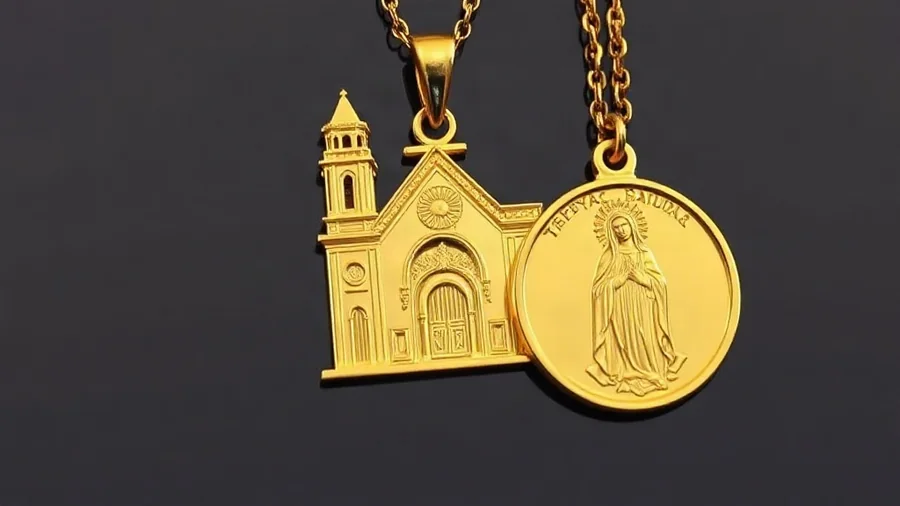
As a curator of sacred jewelry and an expert in liturgical arts, I observe that the devotion at Tepeyac manifests tangibly through the medium of precious metals. In the realm of sacred goldsmithing, the choice of materials is never arbitrary; it is governed by a theology of beauty. The use of 14K gold and 925 sterling silver in medals, necklaces, and liturgical vessels dedicated to the Virgin of Guadalupe serves to reflect the "Uncreated Light" of God. Gold, being the most noble of metals, symbolizes divinity, eternity, and the kingship of Christ, while silver, with its lunar purity, is traditionally associated with the Virgin Mary. When these metals are combined in a devotional piece, they create a material harmony that mirrors the spiritual union of the Mother and the Son.
The craftsmanship of high-end Guadalupe medals requires a mastery of *repoussé* and chasing techniques to capture the delicate features of the *Morenita* and the intricate folds of her mantle. A piece of authentic sacred jewelry is identified by its hallmarks—the small stamps that certify the purity of the metal (such as "14K" or "925"). In the context of heirloom jewelry, these hallmarks are not merely commercial guarantees but certificates of authenticity for a piece intended to last for generations. The weight and density of 925 silver provide the necessary durability for daily wear, while the luster of 14K gold ensures that the devotional object does not tarnish, symbolizing the imperishable nature of the faith it represents.
The care and preservation of these sacred objects are paramount. Devotional jewelry, especially pieces that have been blessed by a priest, should be treated with a reverence that transcends their monetary value. To maintain the brilliance of 925 silver, one must avoid harsh chemicals, opting instead for specialized polishing cloths that remove oxidation without scratching the metal. For 14K gold, a gentle cleaning with distilled water and a soft brush is sufficient. I always advise collectors and devotees to store their sacred medals in silk-lined boxes to prevent abrasions. When a piece of jewelry becomes a family heirloom, passed from grandmother to granddaughter, it ceases to be a mere accessory and becomes a "sacramental"—a physical anchor for family prayer and ancestral memory.
Furthermore, the selection of a devotional piece should be an act of intentionality. Whether it is a delicate gold chain with a miniature image of the Virgin or a substantial silver rosary, the object serves as a constant tactile reminder of the presence of the Divine. In the tradition of sacred orfebrería, the "magnificence" of the material is intended to honor the subject. Just as the altars of the Basilica are adorned with gold and silver to signify the glory of the Queen of Heaven, the individual wearing a gold medal is making a silent profession of faith. The metal becomes a conduit for prayer, a tangible link between the wearer and the sanctuary of Tepeyac, ensuring that the grace of the shrine accompanies the believer in the mundane challenges of daily life.
18K Gold Plated / Baño de Oro 18K con acabado de orfebrería fina.
Prime Delivery Guaranteed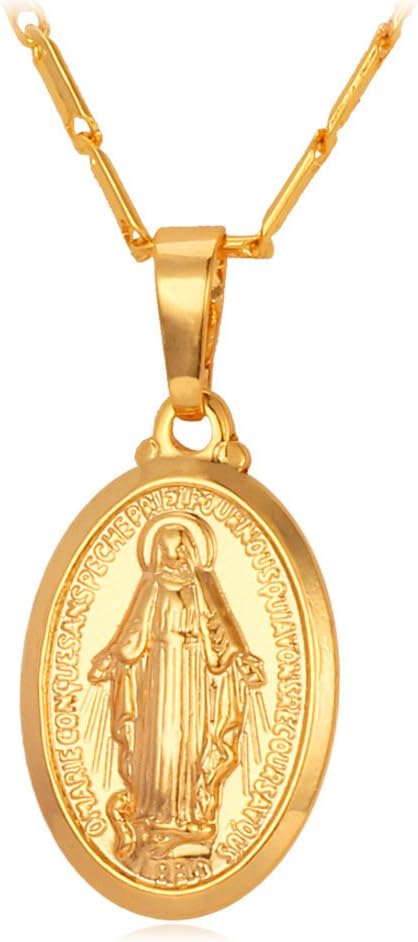
18K Gold Plated / Baño de Oro 18K con acabado de orfebrería fina.
Prime Delivery Guaranteed
Stainless Steel / Acero Inoxidable con acabado de orfebrería fina.
Prime Delivery GuaranteedWhen selecting a Guadalupana piece, always prioritize certified precious metals (solid nickel-free 14K gold or Italian 925 sterling silver). Upon receiving it, take it to your parish priest for a traditional Catholic blessing to consecrate it as an enduring sacramental of protection.
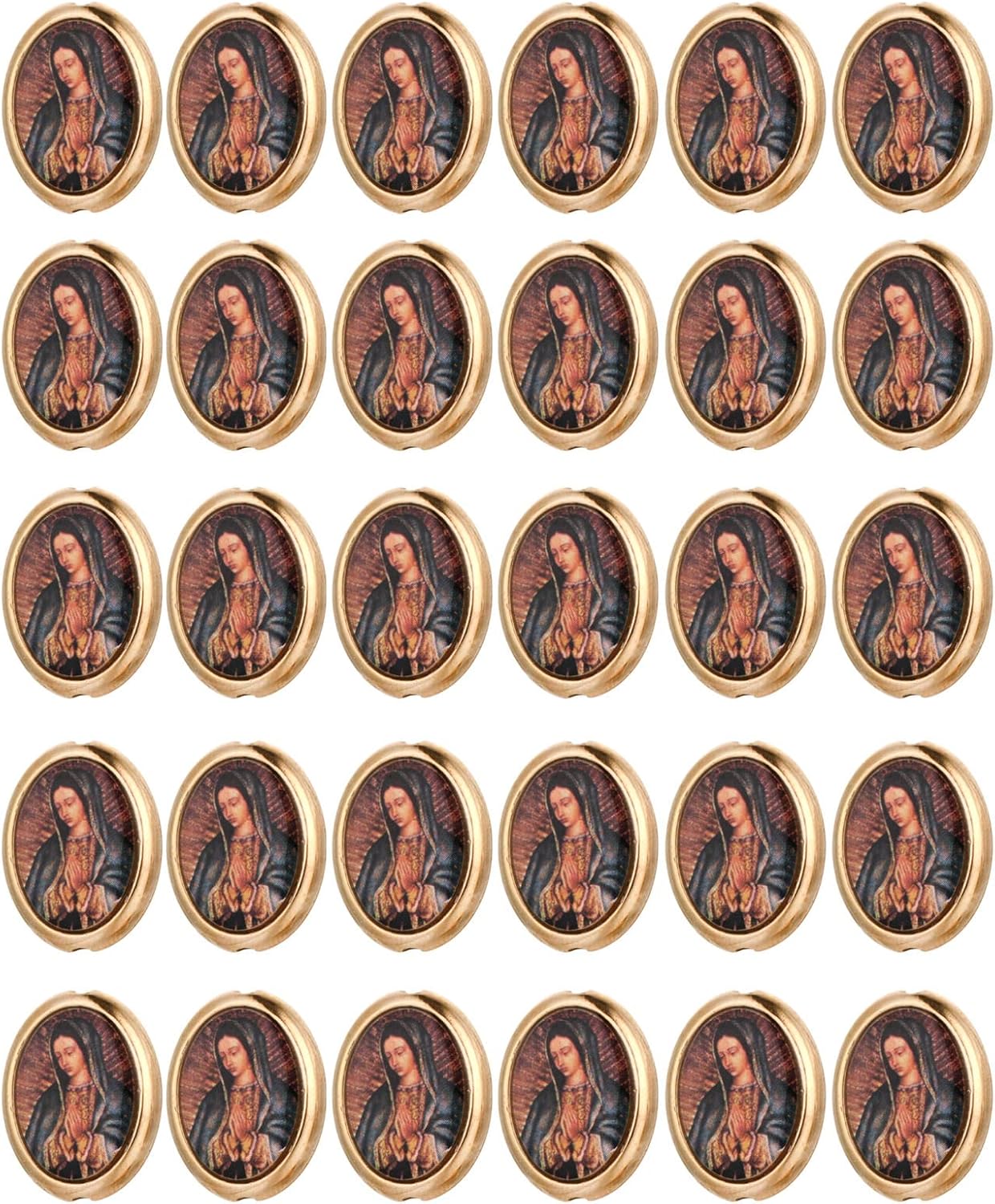
Devotional Cord & Wood / Cordón y Madera con acabado de orfebrería fina.
Prime Delivery Guaranteed
925 Sterling Silver / Plata de Ley 925 con acabado de orfebrería fina.
Prime Delivery Guaranteed
18K Gold Plated / Baño de Oro 18K con acabado de orfebrería fina.
Prime Delivery GuaranteedThe relationship is one of profound continuity and transformation. Archaeologically, Tepeyac was a recognized ceremonial center for the Mexica and other Nahua peoples, where the deity Tonantzin ("Our Revered Mother") was venerated. This pre-Hispanic foundation created a "sacred geography" that associated the hill with motherhood, fertility, and the earth. When the Virgin of Guadalupe appeared in 1531, she did so in a location already imbued with the concept of maternal divinity, which arguably facilitated the rapid adoption of the Marian cult among the indigenous population. From a historical perspective, some critics argue that the cult of Guadalupe was a strategic overlay to replace the worship of Tonantzin. However, from a theological and devotional standpoint, it is viewed as a fulfillment. The indigenous people did not simply abandon their ancestral connection to the hill; they redirected it toward the Mother of God, who offered a more complete and liberating promise of salvation. Thus, Tepeyac stands as a site where two distinct religious eras intersect, blending into a unique Mexican identity.
Authenticity in sacred jewelry is verified through hallmarks and professional testing. A piece of 925 sterling silver will typically bear a "925" stamp, indicating it consists of 92.5% pure silver and 7.5% alloy for strength. Similarly, 14K gold should be marked as "14K" or "585" (meaning 58.5% gold). For high-value heirlooms, a jeweler can use an XRF (X-ray fluorescence) analyzer to determine the exact metal composition without damaging the piece. Ensuring the purity of the metal is a matter of integrity, as the nobility of the material is intended to honor the sacred image it bears. Regarding the priestly blessing, it is important to understand that the blessing does not change the chemical properties of the metal, but it changes the spiritual status of the object. A blessing is a prayer that sets the object apart for a holy purpose, transforming a piece of jewelry into a "sacramental." While the medal itself is not a source of magic, it becomes a channel of grace and a reminder of the wearer's baptismal promises. The blessing invites the Holy Spirit to accompany the person wearing the object, making it a tool for spiritual warfare and a catalyst for prayer.
When selecting devotional jewelry, one should prioritize a balance between aesthetic beauty and material durability. For daily wear, 14K gold is highly recommended because of its resistance to corrosion and hypoallergenic properties. If choosing 925 silver, it is advisable to select pieces with a rhodium plating, which prevents the silver from tarnishing quickly. The design should be chosen based on the wearer's spiritual intention—for instance, a small, discreet medal for constant companionship, or a more ornate piece for special liturgical celebrations. In terms of wearing these objects, the Catholic tradition suggests that they be worn with modesty and intention. A devotional necklace should be worn close to the heart, symbolizing the intimate relationship between the believer and the Virgin. It is also recommended to avoid treating these pieces as mere fashion accessories; instead, they should be put on with a short prayer of entrustment. By treating the jewelry as a sacred object, the wearer maintains a state of mindful devotion throughout the day, turning a simple piece of gold or silver into a portable sanctuary.
The legacy of the Tepeyac acts as a spiritual anchor for millions of families, particularly in the Hispanic world. The tradition of the "December pilgrimage" often becomes a multi-generational event, where grandparents introduce children to the story of Juan Diego and the *Morenita*. This practice transforms the faith from an abstract set of doctrines into a lived experience. The Tepeyac provides a tangible point of reference—a place where the family can gather to give thanks for favors received or to seek intercession for those in need. Furthermore, the transmission of faith is often materialized through the passing down of devotional objects, such as a silver medal or a rosary acquired at the shrine. These objects become "memory vessels" that carry the prayers of ancestors. When a mother gives her daughter a Guadalupe medal, she is not just gifting jewelry; she is transmitting a legacy of trust in Divine Providence. In an increasingly secular world, the enduring pull of the Tepeyac ensures that the family remains connected to its spiritual roots, fostering a sense of belonging to a larger, eternal community of faith.
Affiliate Disclosure: As an Amazon Associate, this devotional portal earns from qualifying purchases at zero additional cost to you.
Find the perfect sacred piece in 3 simple steps
Handpicked based on your preferences and occasion