Laura's Selection
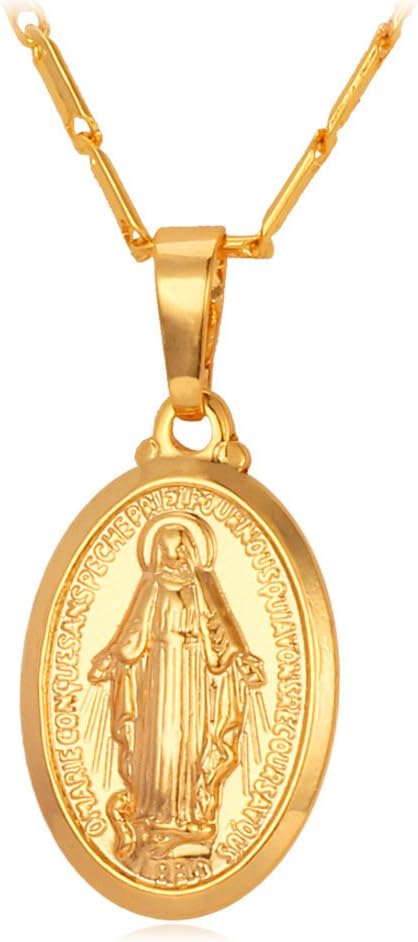
U7 Virgin Mary Necklace for Women,18K Gold Plated/Sterling Silver
18K Gold Plated / Baño de Oro 18K con acabado de orfebrería fina.
Prime Delivery Guaranteed
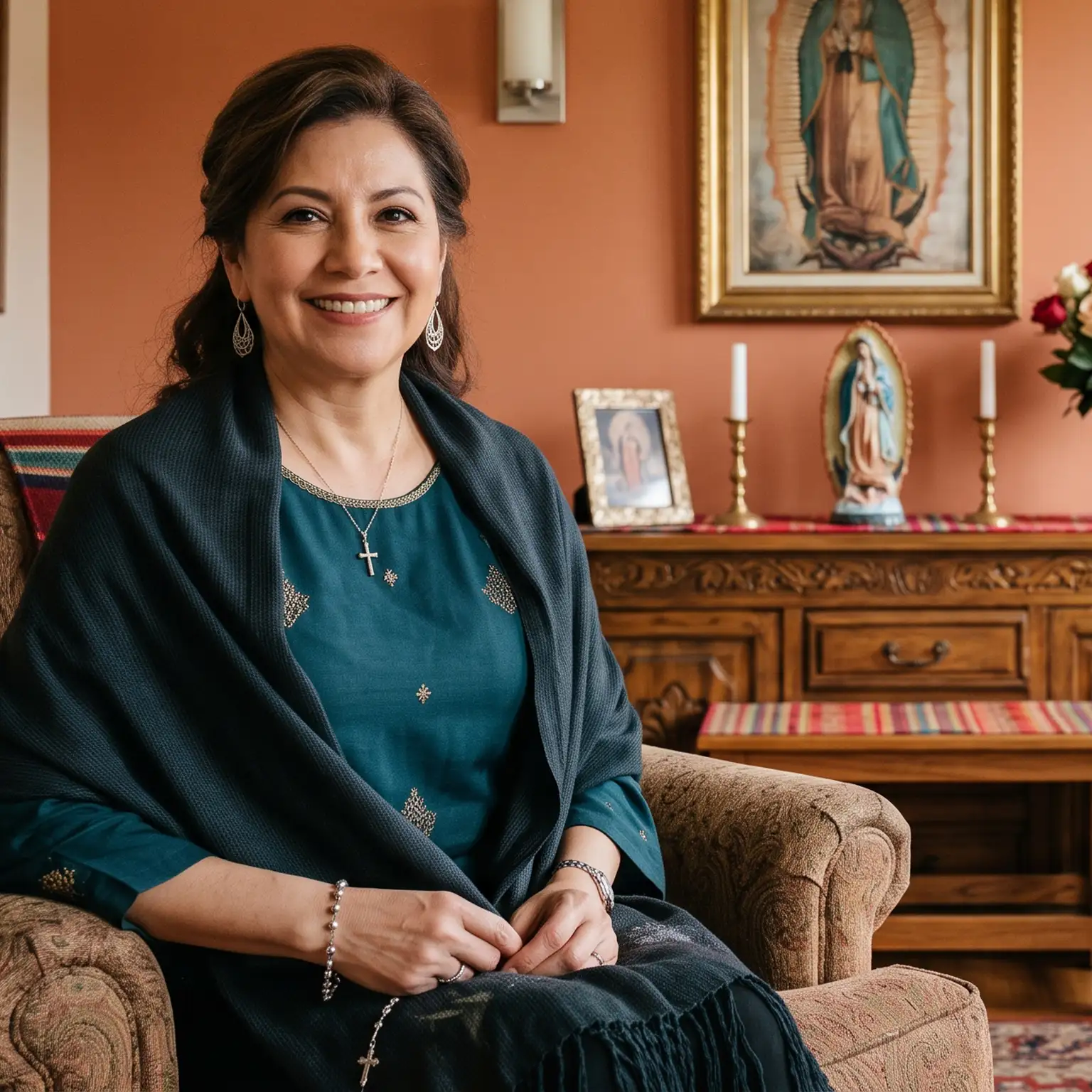
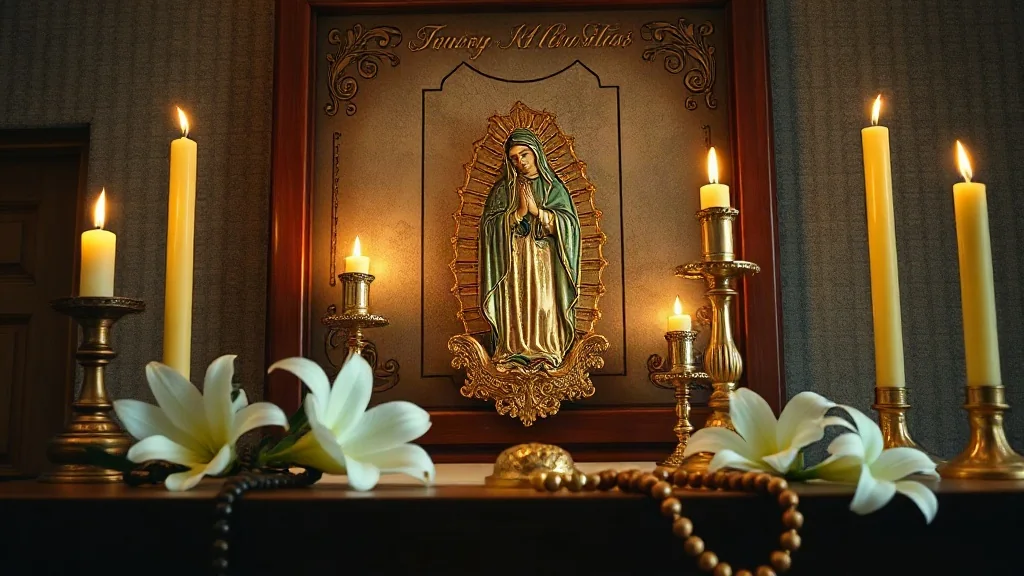
To wear a necklace of Our Lady of Guadalupe on a daily basis is to carry upon one's chest a profound theological synthesis, a visible prayer, and a silent testament to a maternal protection that transcends time and geography. In the rigorous tradition of Catholic devotion, this act is far from a mere aesthetic choice or a superficial adherence to cultural trends; rather, it constitutes a "sacramental" experience in the broad sense of the word. By placing the image of the *Morenita* close to the heart, the believer establishes a constant, tactile connection with the intercession of the Virgin Mary. This daily practice transforms the jewelry into a spiritual anchor, reminding the wearer of their identity as a child of God and a ward of the Mother of Mercy, fostering a state of perpetual consciousness regarding the divine presence amidst the noise and tribulations of contemporary secular life. From a spiritual perspective, the daily use of a Guadalupe medal operates as a catalyst for interiority and conversion. It is not the gold or the silver that possesses an inherent magical power—for the Catholic Church explicitly rejects the notion of superstitious talismanism—but rather the intention of the heart and the faith of the wearer that animate the object. When a devotee touches the medal during a moment of anxiety or offers a brief prayer while feeling the weight of the pendant, they are engaging in a centuries-old tradition of "material piety." This practice serves as a visible sign of an invisible alliance, a commitment to live according to the Gospel, and a public declaration of belonging to a spiritual lineage that finds in Mary the perfect model of obedience, humility, and unconditional love.
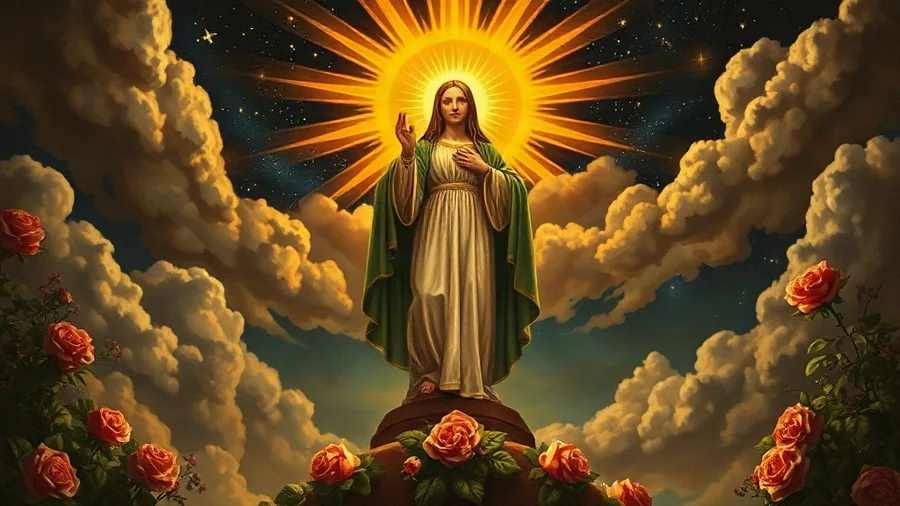
The genesis of this devotion is rooted in the winter of 1531, atop the hill of Tepeyac in the Valley of Mexico. According to ecclesiastical tradition and historical accounts, the Virgin Mary appeared to an indigenous convert, Juan Diego Cuauhtlatoatzin, requesting the construction of a temple in her honor. The climax of these apparitions occurred on December 12, when the miraculous imprint of the Virgin was found upon Juan Diego's *tilma* (a cloak made of agave fibers). This event was not merely a religious phenomenon but a pivotal sociopolitical moment that facilitated the evangelization of the New World, as the image blended European Marian iconography with indigenous symbols, creating a bridge of understanding between two colliding worlds.
Throughout the colonial period, the devotion to Our Lady of Guadalupe consolidated as the spiritual bedrock of the New Spanish identity. By the 17th and 18th centuries, the image had moved beyond the confines of the Basilica to permeate every level of society, from the highest ecclesiastical hierarchies to the most marginalized indigenous communities. It became a symbol of unity and dignity, asserting that the divine gaze rested upon the oppressed and the humble. The proliferation of small-scale reproductions of the image in the form of medals and pendants began to emerge during this era, allowing the faithful to carry the "Queen of Mexico" with them, effectively transforming the private space of the body into a portable shrine.
In the 19th century, the spiritual significance of the Guadalupe image expanded into the realm of national identity and liberation. During the struggle for Mexican independence and subsequent conflicts, the image of the Virgin served as a banner of hope and a catalyst for social cohesion. The act of wearing a Guadalupe medal became a gesture of both religious fervor and cultural resistance, signaling a shared heritage and a common spiritual destiny. This period solidified the transition of the medal from a purely devotional object to a marker of ethnic and spiritual belonging, particularly for those in the diaspora who sought to maintain a link to their ancestral roots.
In the modern era, the devotion has achieved a global dimension, extending far beyond the borders of Mexico to encompass the entirety of the Americas and the world. The 20th century witnessed a surge in the production of high-quality sacred jewelry, as the Church encouraged the use of sacramentals to combat the spiritual void of modernity. Today, the daily wearing of an Our Lady of Guadalupe necklace is understood as a synthesis of these historical layers: the miraculous origin of 1531, the colonial consolidation of faith, the nationalistic identity of the 19th century, and the universal maternal call of the 21st century. It remains a living chronicle of grace, etched in metal and worn upon the skin.
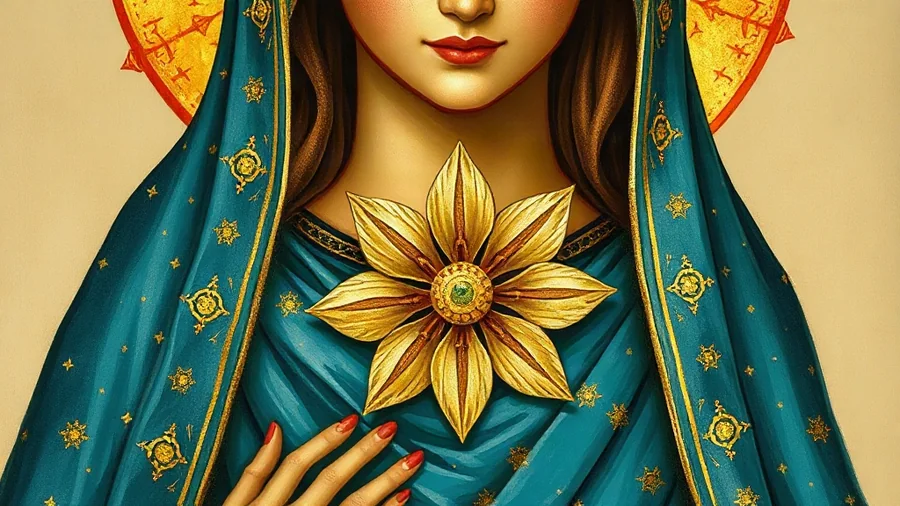
The theological richness of the Our Lady of Guadalupe image is an exercise in "visual catechesis." Every element of the iconography is a deliberate theological statement. For instance, the *cozcatl*—the brooch or necklace worn by the Virgin—is of paramount importance. In the Nahuatl tradition, the *cozcatl* was a symbol of life and nobility. Theologically, this brooch, often depicted as a cross or a floral knot, signifies that Mary is the "vessel of the Most High." It is a visual affirmation of her pregnancy with Christ; she is the Tabernacle of the New Covenant. When a believer wears a necklace of the Virgin, they are essentially mirroring this *cozcatl*, symbolizing their own desire to carry Christ within their hearts and to be protected by the maternal mantle.
Furthermore, the image presents a complex interplay of symbols: the blue-green mantle adorned with stars represents her queenship over the heavens, while the black sash (cinturón) tied around her waist is a traditional indigenous sign of pregnancy. This juxtaposition affirms the dogma of the Incarnation—that God became man through the consent of a virgin. The rays of the sun surrounding her indicate that she is "clothed with the sun," a reference to the Woman of the Apocalypse in Revelation 12, yet she stands before the moon, symbolizing her dominion over time and the changing tides of human history. To wear this image daily is to wrap oneself in these dogmatic truths, transforming a piece of jewelry into a constant meditation on the mystery of the Redemption.
From a Marian perspective, the daily use of the necklace emphasizes the role of Mary as *Mediatrix* and *Intercessor*. Catholic doctrine teaches that Mary does not replace the mediation of Christ but directs all prayers toward Him. Therefore, the necklace serves as a "spiritual telephone," a reminder that the wearer is not alone in their struggles. The act of wearing the medal is an act of trust in the *Mater Misericordiae* (Mother of Mercy). It is an acknowledgment that, just as she comforted Juan Diego, she continues to offer solace to the broken-hearted and strength to the weary. The spiritual meaning is thus one of profound intimacy; the necklace is a tangible link to a Mother who knows the depths of human suffering and the heights of divine love.
Finally, the daily habit of wearing the Guadalupe necklace fosters a commitment to public testimony. In an age of increasing secularization, the visible presence of a sacred image is a courageous act of faith. It signals to the world that the wearer's primary allegiance is to the Kingdom of God. However, this testimony is not one of imposition, but of invitation. The gentle, compassionate expression of the Virgin on the medal invites others to seek the same peace and protection. Thus, the spiritual meaning evolves from a private devotion to a missionary act, where the jewelry becomes a silent herald of the Gospel, testifying to the mercy of God through the tenderness of His Mother.
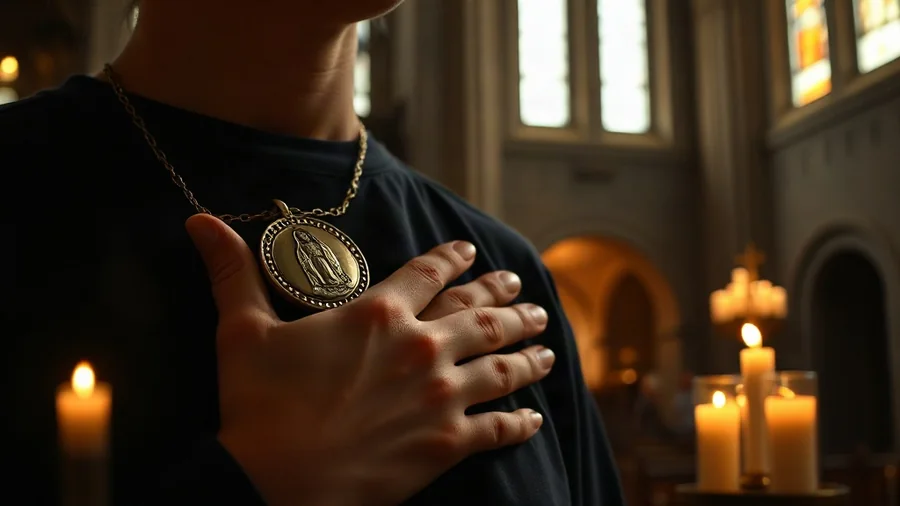
In the realm of sacred jewelry and curatorship, the choice of material is never arbitrary; it is an extension of the devotional intent. The use of noble metals such as 14K gold and 925 sterling silver is rooted in the tradition of offering the best to the Divine. Gold, historically associated with the sun, royalty, and the eternal nature of God, is often chosen for Guadalupe necklaces to signify the "incorruptibility" of faith and the royal dignity of the Virgin Mary. A 14K gold piece, with its balanced alloy of purity and durability, represents a permanent offering—a jewelry piece intended to survive the wearer and become a family heirloom, passing the flame of faith from one generation to the next.
Sterling silver (925), on the other hand, carries a different but equally profound symbolism. Associated with the moon and purity, silver reflects the luminous quality of the Virgin's presence. In many Latin American cultures, silver is the metal of the people, combining accessibility with a timeless elegance. From a technical standpoint, the craftsmanship of a Guadalupe medal requires immense precision; the "repoussé" and "chasing" techniques are often employed to create the three-dimensional relief of the Virgin's features, the folds of her mantle, and the delicate rays of the sun. A high-quality medal is characterized by the clarity of the image, ensuring that the theological symbols—the sash, the stars, and the *cozcatl*—are legible and distinct.
The hallmarks of authenticity, such as the "925" stamp for silver or the "14K/585" stamp for gold, are not merely commercial guarantees but markers of integrity. In sacred orfebrería, the integrity of the material reflects the integrity of the devotion. A piece crafted from genuine noble metals does not tarnish the skin nor lose its luster easily, symbolizing a faith that remains steadfast despite the trials of time. Curators of sacred art emphasize that the care of these pieces—cleaning them with soft cloths and storing them in velvet linings—is an act of veneration in itself, treating the object not as a commodity, but as a vessel of spiritual significance.
Moreover, the construction of the chain—whether it be a delicate cable, a sturdy curb, or a classic rope chain—adds a layer of symbolic meaning. The chain represents the bond of love and the continuity of prayer that connects the believer to the divine. When selecting a devotional necklace, the balance between the weight of the medal and the strength of the chain is crucial, ensuring that the image rests centrally upon the sternum, the place of the heart. This alignment is intentional, as it physically centers the wearer's life around the intercession of the Virgin, making the jewelry a physical manifestation of a centered, spiritual existence.
18K Gold Plated / Baño de Oro 18K con acabado de orfebrería fina.
Prime Delivery Guaranteed
18K Gold Plated / Baño de Oro 18K con acabado de orfebrería fina.
Prime Delivery Guaranteed
18K Gold Plated / Baño de Oro 18K con acabado de orfebrería fina.
Prime Delivery GuaranteedWhen selecting a Guadalupana piece, always prioritize certified precious metals (solid nickel-free 14K gold or Italian 925 sterling silver). Upon receiving it, take it to your parish priest for a traditional Catholic blessing to consecrate it as an enduring sacramental of protection.

18K Gold Plated / Baño de Oro 18K con acabado de orfebrería fina.
Prime Delivery Guaranteed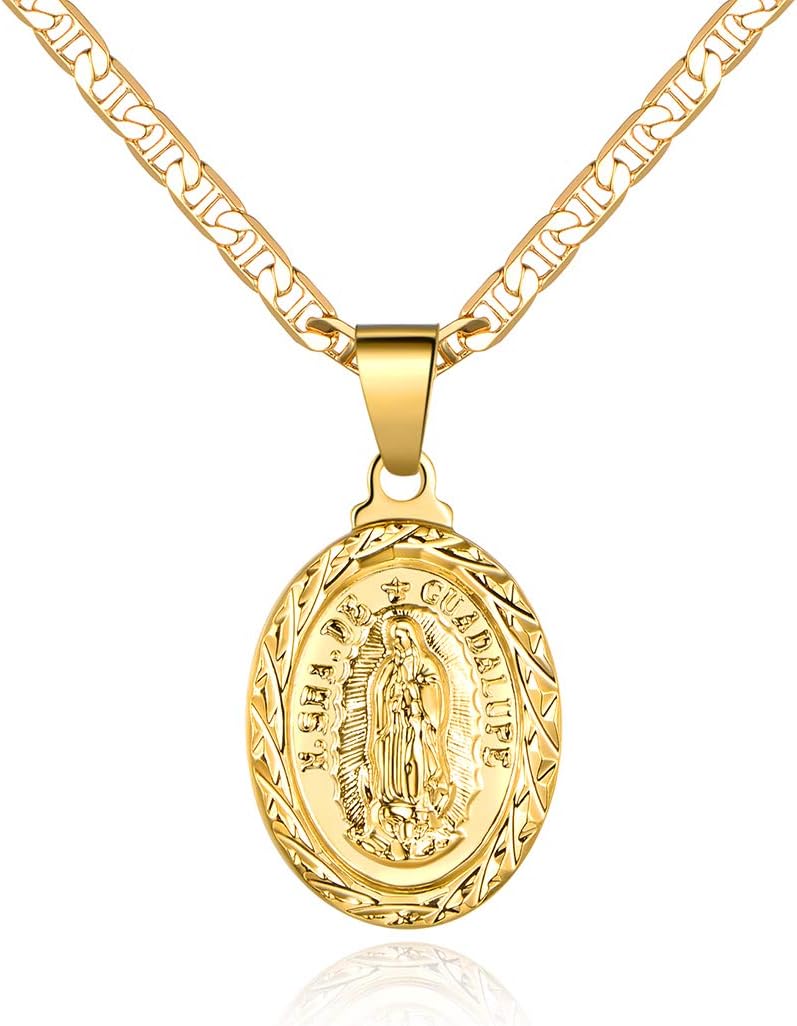
18K Gold Plated / Baño de Oro 18K con acabado de orfebrería fina.
Prime Delivery Guaranteed
Devotional Cord & Wood / Cordón y Madera con acabado de orfebrería fina.
Prime Delivery GuaranteedWearing an Our Lady of Guadalupe necklace daily is a practice of "constant remembrance." Spiritually, it serves as a visible anchor that prevents the believer from drifting into the distractions and anxieties of the world. By keeping the image of the Virgin close to the heart, the wearer is reminded of their identity as a beloved child of God and is encouraged to emulate the virtues of Mary: her humility, her unwavering faith, and her capacity for selfless love. It is an act of surrender, placing one's daily life under the maternal mantle of the *Morenita* for protection and guidance. Furthermore, the daily use of the necklace functions as a silent, continuous prayer. Each time the wearer feels the medal against their skin or sees it in a mirror, it triggers a momentary return to a state of grace and mindfulness. It is not merely a piece of jewelry, but a "spiritual companion" that accompanies the individual through the mundane and the extraordinary, transforming the ordinary act of dressing into a ritual of faith and a renewal of one's covenant with the Divine.
Yes, it is highly recommended that a devotional necklace be blessed by a priest. In Catholic theology, a blessing is not a "magic spell" that imbues the metal with power, but a prayer that sets the object apart for a sacred purpose. The blessing asks God to make the object a channel of grace and a reminder of the wearer's commitment to a holy life. While the medal remains a physical object, the blessing aligns the wearer's intention with the Church's intercessory power, transforming the jewelry into a true sacramental. Regarding the metal, the authenticity of the gold or silver does not change the "efficacy" of the Virgin's intercession, as God looks at the heart and not the price of the jewelry. However, the use of noble metals is a gesture of honor and reverence. Offering the best materials to a sacred image is a traditional way of expressing the value one places on their faith. Moreover, the durability of 14K gold or 925 silver ensures that the image remains preserved and beautiful over decades, allowing the piece to serve as a lasting spiritual legacy for future generations.
Selecting devotional jewelry should be a process of discernment and prayer. One should look for an image that is iconographically accurate—ensuring the presence of the *cozcatl*, the sash, and the stars—as these elements carry the theological weight of the message. The choice of metal should reflect the wearer's intention: gold for a sense of eternal offering and royalty, or silver for purity and luminous devotion. The most important factor is that the piece be chosen with a heart open to the guidance of the Holy Spirit, rather than for mere fashion. In terms of wearing it, the spiritual integrity is maintained through the intention of the heart. It is important to avoid treating the necklace as a "lucky charm" or a superstitious object. Instead, it should be worn with the consciousness that the power resides in God and the intercession of Mary, not in the metal itself. Wearing it with modesty and reverence, and occasionally pausing to offer a prayer of gratitude while holding the medal, ensures that the jewelry remains a tool for spiritual growth rather than a decorative accessory.
A Guadalupe necklace often becomes a "sacred heirloom," a physical bridge connecting generations of a family. When a grandmother passes her gold medal to her granddaughter, she is not merely transferring a piece of jewelry, but a legacy of faith, a history of answered prayers, and a tradition of maternal protection. This transfer creates a spiritual lineage, reminding the younger generation that they are part of a larger story of devotion and that the same Mother who protected their ancestors continues to watch over them. In the context of modern family prayer, the necklace can serve as a focal point for shared devotion. For many Latino families, the image of Guadalupe is the center of the home; wearing the necklace extends that domestic sanctuary into the public sphere. It encourages conversations between parents and children about faith, identity, and the importance of Mary's role in the history of salvation. Thus, the daily wearing of the necklace transforms a personal devotion into a communal heritage, weaving the threads of family love with the eternal tapestry of divine grace.
Affiliate Disclosure: As an Amazon Associate, this devotional portal earns from qualifying purchases at zero additional cost to you.
Find the perfect sacred piece in 3 simple steps
Handpicked based on your preferences and occasion